Platform
MemFlair: The Workflow Context Layer Behind the Sprint
MemFlair is the reusable workflow-context platform Vetratek configures during Sprint Lite. v1 is intentionally narrow: strong workflow scope, honest limits, and measurement hooks—not a full enterprise AI operating system. Workflow context means the decisions, conventions, examples, and guardrails a team normally has to reconstruct by hand every time.
What MemFlair v1 is
A reusable workflow-context platform that converts scattered workflow knowledge into structured, labeled, retrievable context bundles tied to a specific workflow profile. MemFlair supports platform-backed engagements by organizing workflow-specific context that a scoped implementation can use—not a universal install across every team or process.
MemFlair is the workflow-context platform underneath the Sprint Lite. It is not available as a standalone product in v1; you access it through a Sprint Lite engagement. If the platform direction is interesting to you, the next step is still a scoped sprint.
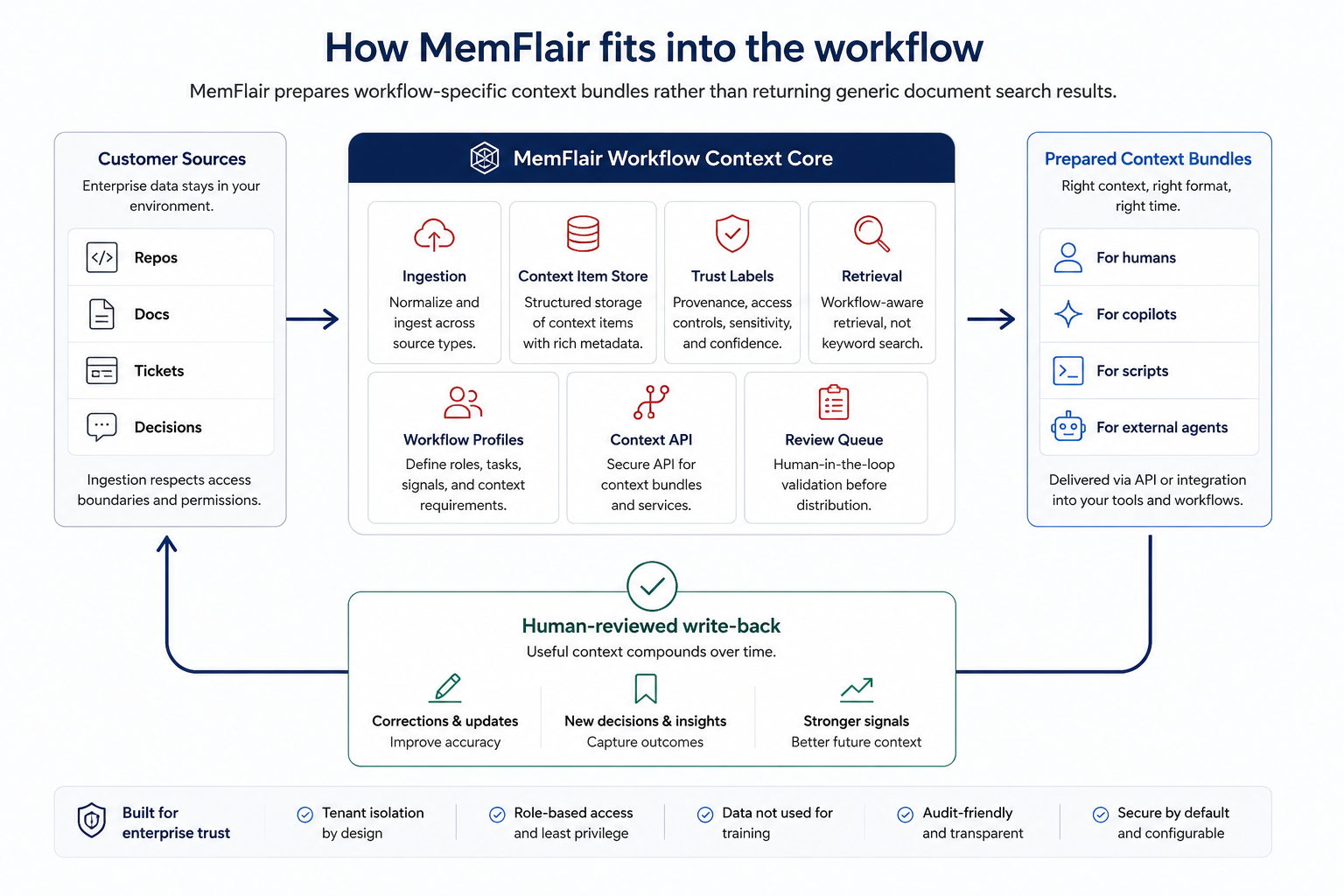
How MemFlair fits into the workflow
MemFlair prepares workflow-specific context bundles rather than returning generic document search results.
What it does
- Ingestion
- Context Item Store
- Trust label state machine
- Retrieval index
- Workflow profiles
- Context API
- Review queue
- Audit and measurement
- Engineering Context Hub Lite
What makes it different
- Workflow-scoped retrieval instead of generic document search.
- Human-confirmed, observed, inferred, agent-proposed, and stale trust labels with provenance.
- Human-reviewed write-back paths instead of silent automation into systems of record.
- Prepared context bundles for practitioners instead of dumping raw chunks into a chat box.
What v1 is not
- Not a full enterprise AI operating system.
- Not full process mining across every system.
- Not autonomous agent orchestration across unrelated workflows.
- Not universal connector coverage for every SaaS in your stack.